 $ USD
$ USD
Blog
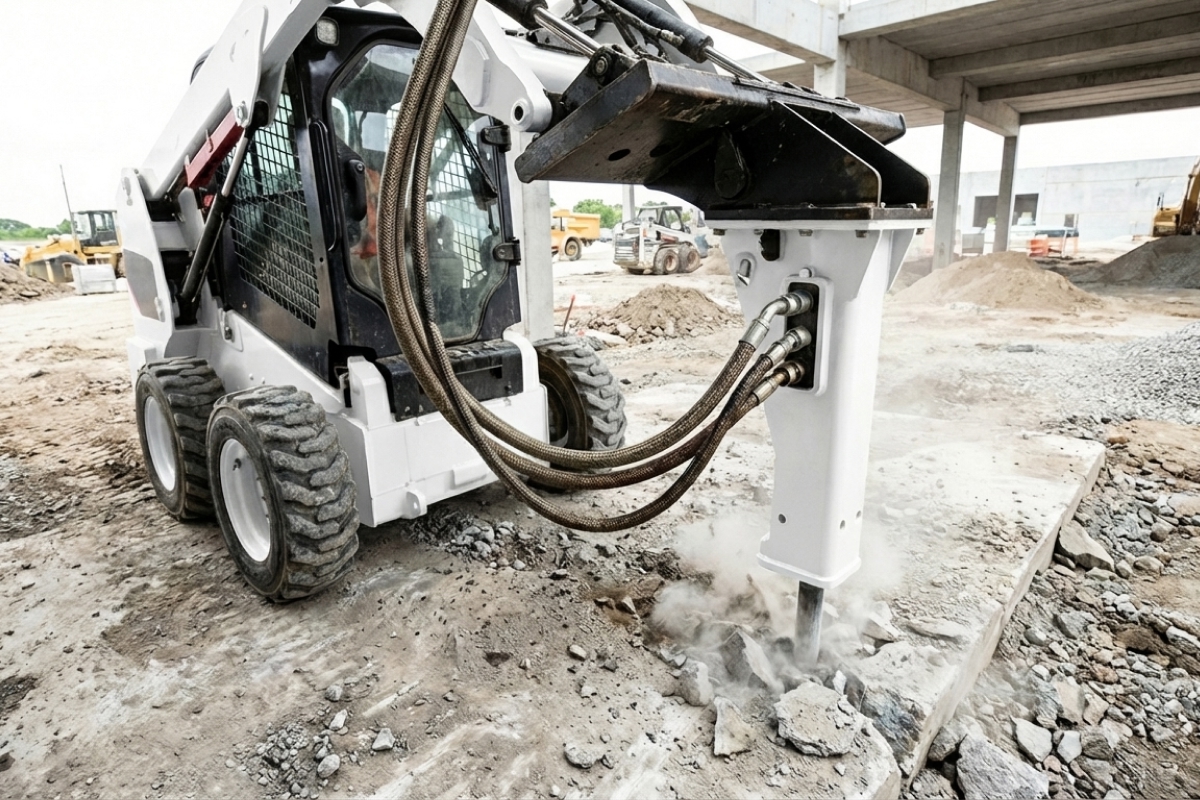
Hydraulic Attachments Explained: How to Maximize Power, Precision, and Performance in Heavy Equipment
A professional guide to hydraulic attachments, covering how they work, how to choose the right one, and how to optimize performance on demanding job sites.
Introduction
Modern heavy equipment is no longer defined only by engine power — it is defined by hydraulic performance.
Hydraulic attachments have transformed the way machines operate, enabling a single unit to perform multiple specialized tasks with precision and efficiency.
However, using hydraulic attachments correctly requires a clear understanding of compatibility, performance limits, and application requirements.
Without that knowledge, operators risk reduced efficiency, equipment damage, and costly downtime.
What Are Hydraulic Attachments?
Hydraulic attachments are tools powered by a machine’s hydraulic system rather than mechanical force alone.
They use pressurized fluid to generate movement and force, allowing for controlled, high-power operations.
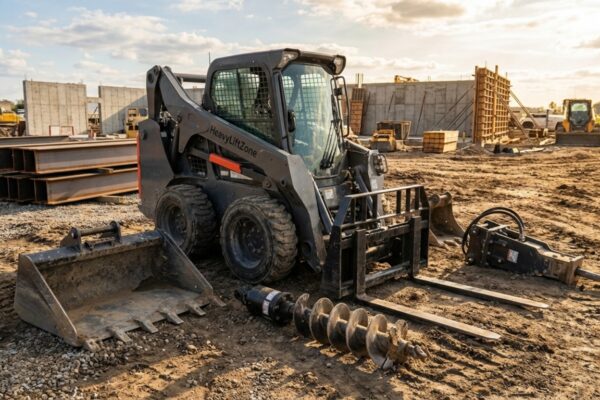
Common hydraulic attachments include:
- Hydraulic breakers
- Augers
- Grapples
- Compactors
- Hydraulic hammers
These attachments expand the machine’s capabilities without requiring additional equipment.
How Hydraulic Systems Work (Simplified)
A hydraulic system operates by transferring pressurized fluid through hoses and valves to generate force.
Key components include:
- Hydraulic pump
- Control valves
- Hydraulic lines
- Cylinders or motors
The system converts fluid pressure into mechanical energy, enabling attachments to perform heavy-duty tasks with precision.
Why Hydraulic Attachments Are Essential
Hydraulic attachments provide several critical advantages:
1. Increased Power Output
Hydraulic systems deliver consistent force, making them ideal for demanding applications such as breaking concrete or drilling into hard ground.
2. Precision Control
Operators can control movement accurately, allowing for:
- Cleaner cuts
- Precise drilling
- Controlled demolition
3. Multi-Function Capability
One machine can perform multiple tasks simply by switching attachments, reducing equipment costs.
4. Reduced Manual Labor
Hydraulic power replaces manual effort, improving efficiency and safety.
Types of Hydraulic Attachments and Their Applications
Hydraulic Breakers
Used for demolition work, including:
- Breaking concrete
- Road removal
- Rock fragmentation
They deliver high-impact force with controlled precision.
Hydraulic Augers
Designed for drilling holes in soil or compact ground.
Applications include:
- Fence installation
- Foundation work
- Utility poles
Hydraulic Grapples
Used for handling irregular materials such as:
- Scrap
- Logs
- Debris
They improve efficiency in material handling operations.
Hydraulic Compactors
Used to compress soil or material for:
- Roadwork
- Foundation preparation
- Trench compaction
Choosing the Right Hydraulic Attachment
1. Match Flow Rate (GPM)
Each attachment requires a specific hydraulic flow rate.
If the flow is:
- Too low → reduced performance
- Too high → potential damage
2. Check Pressure Compatibility
Hydraulic pressure must match the attachment’s requirements to avoid system failure.
3. Consider Application Needs
Choose based on:
- Type of job
- Material being handled
- Frequency of use
4. Evaluate Build Quality
Look for:
- Reinforced construction
- High-grade materials
- Reliable components
Common Mistakes to Avoid
Using Incorrect Flow Settings
This leads to inefficient operation or equipment damage.
Ignoring Maintenance
Hydraulic systems require regular inspection to prevent leaks and failures.
Choosing Low-Quality Attachments
Cheap components often fail under pressure and increase long-term costs.
Maintenance Best Practices
To ensure optimal performance:
- Inspect hydraulic hoses regularly
- Check for leaks or pressure drops
- Keep connections clean
- Replace worn components promptly
Proper maintenance extends both attachment and machine lifespan.
Cost vs Long-Term Value
Hydraulic attachments are an investment in productivity.
High-quality attachments provide:
- Consistent performance
- Reduced downtime
- Longer operational life
Low-cost alternatives often lead to frequent failures and higher costs over time.
Why HeavyLiftZone
HeavyLiftZone provides hydraulic attachments designed for demanding industrial use.
Key advantages:
- Performance-tested equipment
- Compatibility guidance
- Durable construction
- Reliable supply and support
Conclusion
Hydraulic attachments are essential for maximizing the performance of modern heavy equipment.
Choosing the right attachment — and using it correctly — ensures efficiency, precision, and long-term reliability.
For professionals, this is not just an upgrade — it is a necessity.